

Unión de cables
Solución única para PCB & Asamblea
- Gold Wire Bonding & Aluminum Wire Bonding
- Fabricación de PCB, Parts Sourcing & PCB Assembly
- Box Build Assembly & Electromechanical Assembly
- Producción de volumen pequeño a mediano
- ISO9001:2015, ISO 13485:2016 Certified & UL Listed
- 100% Prueba electrónica, AOI, RADIOGRAFÍA, ICT & FCT
¿Qué es la unión de cables??
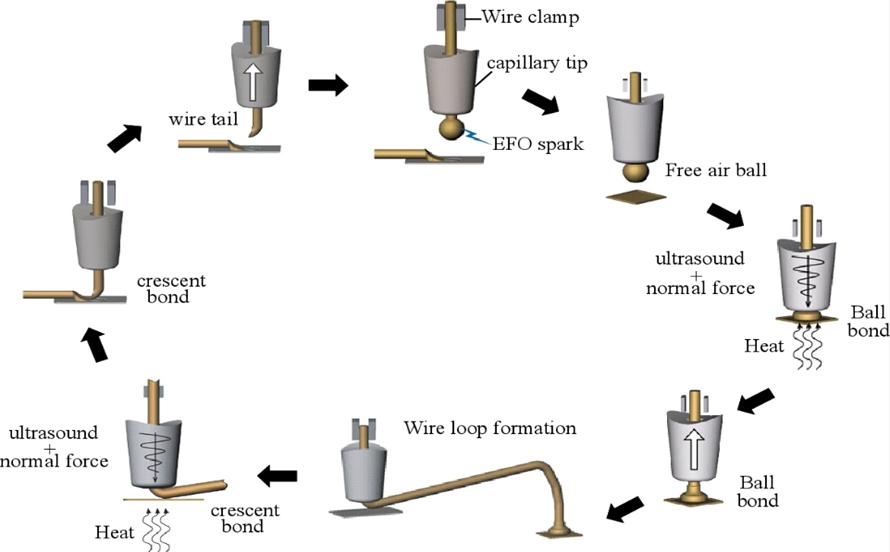
La unión de cables es el proceso de crear interconexiones entre el chip y el sustrato o PCB., desempeñando un papel crucial en el desarrollo de la electrónica PCB moderna. Como tecnología clave en la fabricación de productos electrónicos., La unión de cables permite la creación de circuitos confiables utilizando cables metálicos como el oro., aluminio, y cobre. La selección de materiales adhesivos depende de factores como la aplicación prevista., consideraciones de costos, fiabilidad, y compatibilidad.
Las máquinas de unión de cables están altamente automatizadas., con sistemas avanzados de reconocimiento de patrones (PRS) que ubican con precisión las almohadillas de unión del chip y los puntos de referencia de la PCB para una colocación precisa de los cables. Para garantizar una unión óptima, la PCB o el sustrato, junto con el chip, debe sujetarse firmemente en su lugar usando una aspiradora. Esto garantiza la planaridad y la estabilidad durante el proceso de unión.. Luego se utiliza una herramienta capilar para sujetar y unir el cable., asegurando una conexión confiable.
En Gold Mate, Ofrecemos soluciones de unión de cables de primer nivel para garantizar que sus componentes electrónicos estén interconectados con precisión y eficiencia., contribuyendo a la durabilidad y rendimiento de sus dispositivos.
¿Cuáles son los diferentes tipos de unión de cables??
Unión ultrasónica
Unión por termocompresión
Los beneficios del ensamblaje de PCB SMT
Miniaturización de PCB
A través de la tecnología de agujeros (Tht) Requiere más espacio en la PCB para el archivo adjunto de componentes, Limitar la flexibilidad de diseño. En contraste, Tecnología de montaje en superficie (Smt) Permite más compacto, ligero, y conjuntos de placa de circuito eficientes. Esto hace que SMT sea la opción ideal para aplicaciones como dispositivos portátiles y portátiles, donde el ahorro de espacio y el rendimiento son esenciales.
Mejor rendimiento eléctrico